
Applications
Microcrystalline Cellulose (MCC 102) is widely used as an excipient in the pharmaceutical industry, primarily as a binder, filler, and disintegrant in tablet formulations. It provides excellent compressibility and flow properties, making it suitable for direct compression processes. MCC 102 is also used in food products as a stabilizer, bulking agent, and fat replacer, and in cosmetics for texture enhancement. Its inert, non‑reactive nature makes it valuable across multiple industries where consistency, safety, and stability are required.
Sales Specifications
Description: White or almost white, fine or granular powder. It consists of free
flowing, non fibrous particles.
Solubility: Practically insoluble in sodium hydroxide solution (1 in 20); insoluble
in water, in dilute acids and in most organic solvents.
Identification By
IR : The IR Spectrum is similar with reference standard/working standard.
Iodinated Zinc Chloride Solution : The Substance becomes violet-blue with Iodinated Zinc Chloride
Solution.
Degree of Polymerization: NMT 350
pH: 5.0 – 7.5
Conductivity: <75 μs/cm
Ether-Soluble Substances: Max 0.05%
Water-Soluble Substances: Max 0.25%
Heavy Metals: NMT 10 ppm
Arsenic: NMT 1 PPM
Cadmium: NMT 0.5 PPM
Lead: NMT 0.5 PPM
Mercury: NMT 1 PPM
Loss on Drying: NMT 7.0 %
Residue on Ignition: NMT 0.10%
Physical Test:
Bulk: Untapped gm/cc 0.28 – 0.34
Density: Tapped gm/cc For information
Sieve Analysis: (+) 60 Mesh NMT 8 %
(+)200 Mesh NLT 45.0 %
Microbial Tests:
Total Aerobic Microbial count: NMT 1000 CFU / g.
Total combined Molds & Yeast Count: NMT 100 CFU / g.
Escherichia coli: Absent in 1 g.
Salmonella species: Absent in 10 g.
Staphylococcus aureus: Absent in 1 g.
Pseudomonas aeruginosa: Absent in 1 g.
Packing
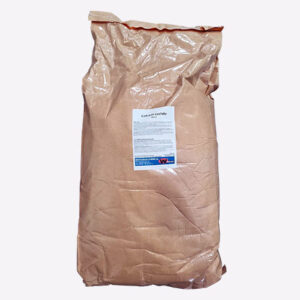
25 kg bags, 20 bags per pallet